

Teaching your child in advance how to be successful in social situations is like teaching them to only drink red punch in the kitchen. It can save a lot of work later.
You don't need to wait until the spaghetti is smeared on the wall of the restaurant or until your daughter opens her birthday gift from Grandma only to toss it aside and ask, "Did anyone bring me a fun present?" to teach acceptable behavior.
President Joseph Fielding Smith said of teaching children important principles that we "must begin teaching them at the cradle-side" (qtd. in Perry 77).
BYU professors and researchers Michelle Marchant and K. Richard Young have identified three simple steps parents can use to teach children acceptable behavior before the restaurant meltdown.
- Communicate your expectations
- Teach in advance
- Prepare and Prompt
Communicate Your Expectations
We all have expectations about our children and their behavior. What are your expectations about when homework should be done? How many friends should your child have over at one time? How would you most like your child to greet guests and say goodbye to them?
Are your expectations fair and is the child capable of meeting them?
Making expectations clear and discussing with your child why they are important to you is a great way to minimize conflict and to help your child feel secure and confident in new situations.
Teach in Advance
Teaching an expected behavior or social skill before a child needs to use it will avoid embarrassing moments (for everyone!), but more importantly, will promote healthy social and emotional development.
Teaching in advance doesn't need to be a long process. A quick explanation outside the grocery store, "We're here today for milk and eggs, and not for treats," can make for a checkout stand experience that's free from a tangle of demands and the dreaded whining that often follows "not today."
Keep in mind that just like reading, some behavior can't be taught until the child is developmentally ready. For example, a child isn't usually ready to sit through an entire sacrament meeting until he or she is about twenty-four months old.
Prepare and Prompt
Prepare children for situations. For example, letting your child know that there are certain "restaurant" behaviors before you leave to go out to eat, or having a reminder role-play before a birthday party can go a long way in helping a child act appropriately.
Gently prompt a child to use the behavior youre working on. A simple, "Remember how we talked about saying thanks," or, "Remember how it's Carrie's party, so we get to watch her open the birthday presents," will usually be all that's needed for a child to put the behavior into action.
The teaching pattern outlined below can be used to teach children social skills. The goal is to provide the child with a positive way to act in a new social situation. Teaching your child to be successful in a new situation will help them have confidence and help avoid unfortunate negative events.
1. Identify
Identify one expectation you have for your child you'd like to teach her. Make sure she is capable of learning it. For this example we'll talk about Abby learning to open birthday gifts at a party.
2. Discuss
Discuss your expectation with your child, and explain why it is important to you. Keeping your list of expectations short (even sticking to one at a time) is part of what will make your teaching successful.
3. Model
Break down the behavior into understandable steps: "After you open the gift you can say thanks to the person who gave it to you." Model the steps, "Watch me pretend to get a gift." Then have your child role play the appropriate behavior with you, "Your turn, Abby!"
4. Practice
Games like "thumbs up" for a good example and "thumbs down" for a bad one (letting parents model both and letting the child be the judge) can be a fun way to discuss expectations and behavior with young children.
5. Prepare
Prepare your child just before the behavior is needed, or prompt them in the moment. "Remember learning about saying thank you? Now's the time to show what you learned."
6. Praise
Praise your child for what he or she did well. "Abby, you did a wonderful job saying thank you. You said it after opening every single present!" This is what will seal the deal!
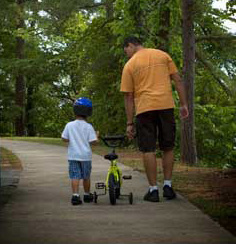
After being scolded several times for interrupting her father, one three-year-old said, "It's hard for little kids to know when they're a-posed to talk." Proactive parenting can minimize conflict and increase a sense of control for your child.
Communicating expectations, teaching your child those expectations in advance, and prompting your child to use the new behavior can help her feel better about herself and relate better with others.
Sources
Marchant, Michelle, and K. Richard Young. "3 B's of effective parenting: Be proactive, be positive, and be consistent." Marriage and Families, (Winter), 18-25.
Perry, L. Tom. "Train Up a Child," Ensign, May 1983, 77.