
Authors of the book Parenting with Love and Logic explain, "parents of two-year-olds are known to say 'no'—in
some for or other—77 percent of the time. Children gradually tire of hearing it"
(75).
The rule with no is that we use it as seldom as possible (Cline and
Fay 75).
As parents, our default response is often "No", even when an unusual request wouldn't be harmful in any way.
"Are you caught up in a power struggle for no good reason?" (McCormick 170). Sometimes we'll find we're responding rigidly because of our own feelings. Turning the living room into a huge blanket hut might be an inconvenience for us, but something we can probably say "Yes" to.
Well discuss how to tap into the fun of "Yes".
One mother said yes to her three-year-old daughter's request to wear her winter coat, hat, and gloves in the middle of July, assuming her daughter would want to take them off as they left to run errands and visit Grandma. But she wore her winter clothing all day long—sweating the entire time. The mother said nothing, and her daughter never asked to wear her winter clothes again until it got cold outside.
Saying "yes" can be a quicker teacher than saying "no".
The axiom, "Say no when you have to and yes when you can" is a handy rule of thumb for parents.
Here are some helpful questions to consider when deciding whether you can say "yes" to your child in good conscience:
- "Is this going to cause irrevocable physical or psychological damage, or is it just something that bugs you?" asks Ron Taffel, Ph.D. ". . . fighting over every uneaten vegetable, unzipped coat, or unmade bed can get you into an endless series of emotionally draining and unproductive arguments."
- "If you go along with your child, how are you going to feel about it tomorrow? Next week? Thinking about the long-term consequences of giving in will help you determine the importance of the issue" (McCormick 170).
- "Making exceptions to rules can be fine, as long as children can understand that the rules haven't changed. Researchers point out, Making exceptions won't lead to revolution" (McCormick 172).
- "Do you have a compelling reason to deny his request?" (McCormick 170). Your state of mind (or house) can be a valid reason to say no to throwing a party.
- Attempting to create a time that will work for you to host the longed-for event will go a long way in helping your child feel she has her wants met.
- Kathleen H. Hughes, former first counselor in the Relief Society general presidency suggested that parents choose to fight the battles that "affect more serious moral issues" (106).
- Saying "no" is sometimes necessary, but saying "yes" can also be a wonderful way to parent. Knowing and applying the difference will require thought and planning.
Take A Breath
Pause for a moment the next time your child asks for something you're tempted to say no to. "Mom, can I dress up like a unicorn for Church?" might be met with a qualified no along with the reasoning behind it, but "Can I have a bath in my swimsuit," might work out just fine if you let the idea settle for a moment.
Think It Through
Parenting experts Cline and Fay categorize "no" as a fighting word, and "yes" as a thinking word. Even just avoiding the word but giving the same message can be more pleasant for kids to handle. "Can I go out and play?" could be answered, "Yes. As soon as your chores are finished," instead of "No. Not until your chores are finished."
Give A Reason
Experts remind us that it is important to point out our reasoning for making exceptions or saying "yes" to atypical things, "Simply tell your child, 'This is not a new rule, this is a special occasion. If it works, maybe we'll do it again sometime, if not, we won't'" (172).
Make A Plan
If there's a common request you say no to, plan in advance a way to say yes. One mom was asked by her kids almost every weekend in the summer if the family could go camping. She kept saying no because she didn't enjoy camping, and because she didn't want to take time packing and unpacking. She finally realized the kids would have just as much fun putting up a tent in the yard with dad and sleeping out there as they would on a "real" camping trip. Mom got to say "yes", sleep in her own bed inside, and have only minimal cleanup to worry about.
Replace It
Cline and Fay suggest that when we're "tempted to use 'no', we can avoid a fight by replacing 'no' with a 'yes' to something else" (75).
Set A Goal
See if you can say yes to some unusual requests—and feel good about it. You could even set a goal to see how long each day you can go without saying an unthinking "no" to your kids.
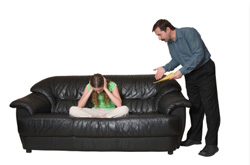
We help our children feel better about the times we need to say "no" when we use "yes" as much as we can.
Another pleasant outcome of "Say no when you have to, and yes when you can"? You are giving your children some of their most interesting and fun childhood memories!
Sources
Cline, Foster, and Jim Fay. Parenting with Love and Logic. Colorado Springs, CO: Pinion Press,
2006.
Hughes, Kathleen H. "Blessing Our Families through Our Covenants."
Ensign, Nov. 2002, 106.
McCormick, Patricia. "Choosing Your Battles."
Parents. April (1994).