
About Us
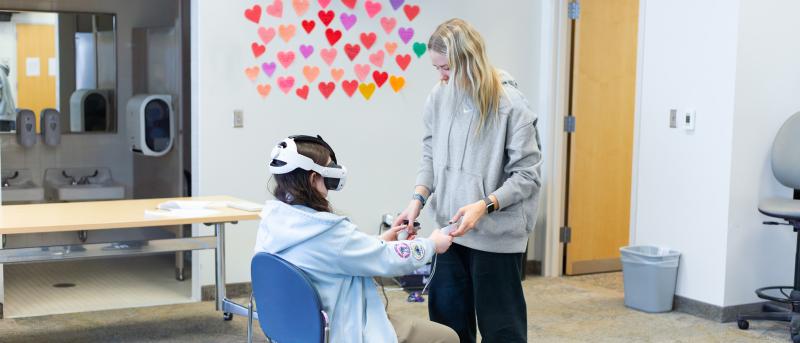
At Brigham Young University's Autism, Virtual Reality, AI, and Digital Education Research (AVADER) Lab, we are reimagining how technology can enhance teaching, learning, and independence for individuals with autism and other disabilities.
Our research brings together emerging technologies and evidence-based instructional practices to address real-world educational challenges. Through artificial intelligence, virtual and augmented reality, video modeling, and other digital innovations, we develop and evaluate instructional approaches designed to make learning more accessible, engaging, and effective.
We believe that meaningful innovation requires more than new technology—it requires a clear understanding of how people learn and rigorous evidence of what works. Our interdisciplinary research focuses on translating technological advances into practical, effective instructional solutions that empower learners, support educators, and promote greater independence and opportunity.
At AVADER, our goal is not simply to advance technology, but to advance what is possible for individuals with disabilities.
Fish iAnimate Project
BYU researchers found that children with autism learn better through interactions with a live animated fish avatar, Marla, than with a person. Led by Bruna Goncalves, the study focuses on teaching social skills like starting conversations, showcasing the effectiveness of live animation for engagement and learning.
Projects

Social Collaboration Project
Virtual reality (VR) can support social collaboration for children with autism by comparing interactions in VR and in-person settings

Fish iAnimate Project
BYU researchers have discovered that children with autism learn effectively through interactions with live animated characters